Choosing HVAC Is a Long-Term Development Decision
When planning a commercial development, cooling is often evaluated through equipment schedules, capacity figures and initial quotations.
But the HVAC brand selected today may remain part of the building for many years, influencing energy consumption, occupant comfort, maintenance and operating costs.
For developers in Nigeria and across West Africa, choosing a cooling solution means considering how the equipment, engineering and ongoing support will work together. These ten questions can help guide that decision.
1. Is the System Right for the Building?
A luxury hotel does not operate like a shopping mall. Hospitals, office towers, data centres and residential developments each have different cooling priorities.
System selection begins with understanding the building’s cooling loads, occupancy patterns, operating hours and zoning requirements.
Depending on the application:
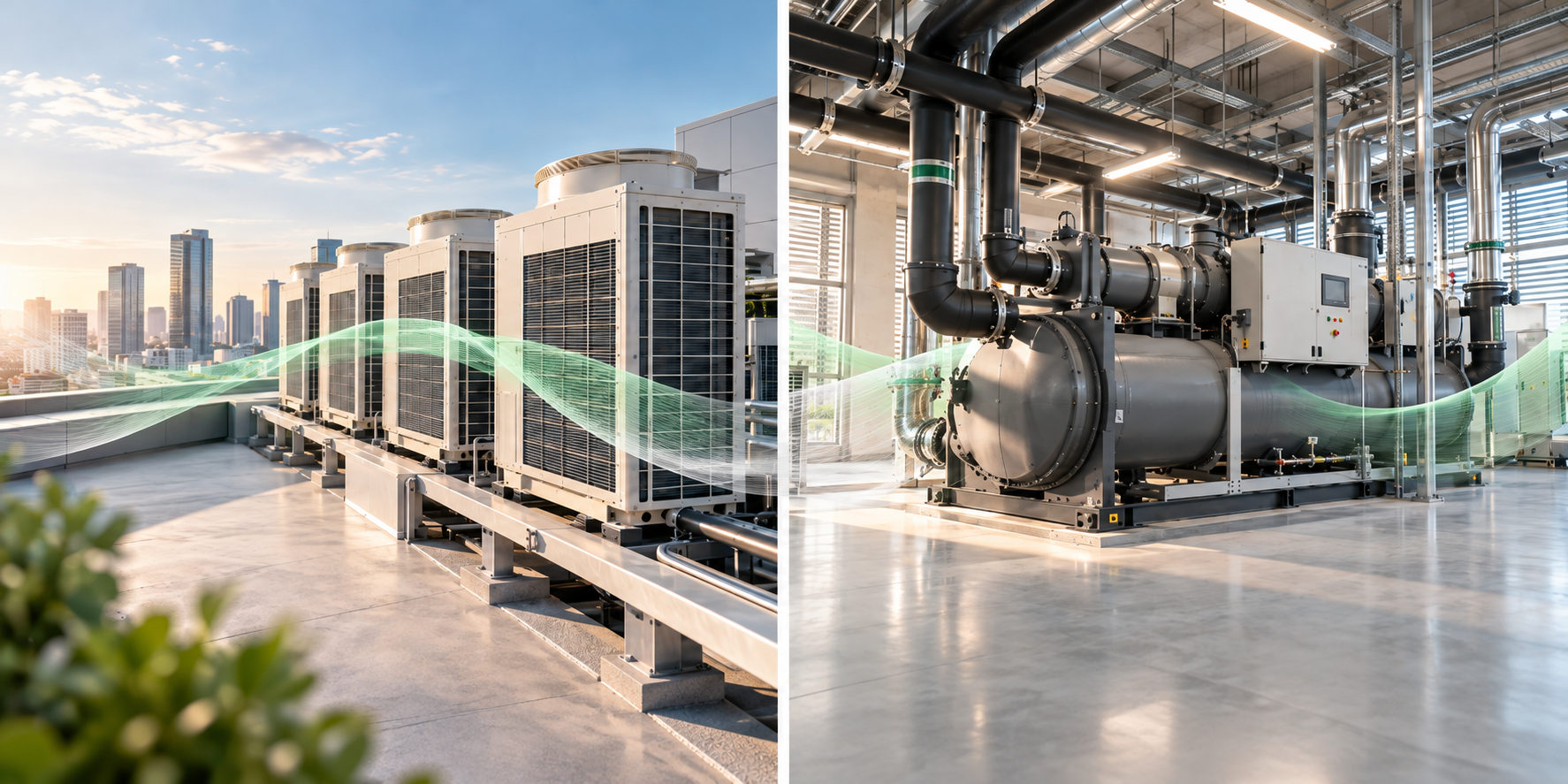
- VRF systems can suit buildings requiring individual zone control.
- Chilled water systems may suit larger developments with high, continuous cooling loads.
- IT cooling systems address the requirements of data centres and other critical environments.
- Ventilation and heat recovery systems can support fresh air management and indoor air quality.
Matching the technology to the application helps the system meet the building’s daily needs.
2. How Reliable Is the Equipment?
Reliability depends on equipment suitability, correct installation, and regular maintenance.
In Nigeria and across West Africa, systems may operate for long hours in high temperatures and humidity. Coastal developments may also face conditions that accelerate corrosion.
Key considerations include manufacturer testing, performance under expected conditions, equipment protection, and access to technical support.
For a large development, these factors directly affect comfort, business operations, and maintenance costs.
3. How Energy Efficient and Quiet Is the System?
The purchase price is only part of HVAC cost. Energy consumption continues throughout the building’s operation.
Features such as inverter technology, efficient performance at partial loads, individual zoning, and smart scheduling can help systems respond to actual demand and limit unnecessary energy use.
Quiet operation also matters, particularly in hotels, residences, offices and healthcare spaces. Equipment sound levels, unit placement, vibration control, and airflow design all contribute to occupant comfort.
Assessing energy and noise performance alongside cooling capacity gives a clearer picture of how the system will perform in practice.
4. What Level of Control Will the Facility Team Have?
Facility teams need practical ways to monitor performance and adjust cooling across spaces with different schedules and requirements.
Depending on the selected system, useful capabilities include:
- Central monitoring and individual zone management
- Operating schedules and temperature control
- Energy monitoring
- Building Management System integration
- Remote system management
The controls need to match how the building will be managed each day.
5. Can the System Scale with the Project?
Many developments are completed in phases. A hotel may open one wing first, while an office tower may lease floors gradually.
Early planning helps establish whether the system can be commissioned in stages, accommodate additional capacity and connect future equipment to existing controls.
This can support project flexibility and reduce the need for major redesign as the development grows.
6. Is Strong Local Engineering Support Available?
Developers need clarity on who will provide technical guidance throughout the project.
Support requirements can include system selection, heat load calculations, technical coordination, commissioning, troubleshooting and preventive maintenance.
An accessible local engineering partner helps connect the equipment with the project’s requirements and supports the transition from planning to daily operation.
7. Are Original Spare Parts Available?
Spare parts availability needs attention before installation begins.
Confirm which original parts are available locally, how quickly critical components can be supplied and how replacement parts will be sourced over time.
For hotels, hospitals, commercial buildings and data centres, a clear parts support plan can help teams manage repairs and limit extended downtime.
8. What Does Long Term Maintenance Require?
Every commercial HVAC system needs servicing. Understanding those requirements early helps developers plan access, resources and operating budgets.
Review maintenance intervals, technician requirements, filter and coil servicing, and, where applicable, water treatment. It is also useful to establish whether some areas can remain operational while others undergo maintenance.
Including servicing in the initial design helps avoid unnecessary difficulties later.
9. What Does the Warranty Really Cover?
Warranty duration alone does not provide the full picture.
Review which components and labour costs are covered, who is authorised to perform repairs and what maintenance conditions apply.
Clarifying replacement parts coverage and support after the warranty ends also helps developers understand their longer term responsibilities.
10. Can the Manufacturer Support the Building Long Term?
HVAC technology continues to evolve as controls become smarter, refrigerants change and energy efficiency expectations increase.
The manufacturer’s ongoing investment in engineering, testing and product development matters because the selected equipment may serve the property for many years.
Considering service capability, controls and future expansion alongside current cooling requirements supports a more informed investment.
Bringing the Right Cooling Solution Together
The strongest HVAC decisions are usually made when the developer, consultant, manufacturer and local engineering partner evaluate the building together.
At Mitsufeel, we combine Mitsubishi Electric cooling technology with project-specific engineering and long-term support across different types of developments, including hotels, offices, residences, healthcare facilities, data centres and industrial projects.
Our approach starts with understanding the building’s cooling loads, occupancy patterns and operating conditions. We consider energy efficiency, quiet operation, zoning and controls alongside maintenance requirements and future expansion. Matching these elements from the planning stage helps support reliable performance and makes the system easier to manage throughout its service life.
With local engineering support and ongoing technical coordination, Mitsufeel helps developers move from initial system selection to a cooling solution built around their project’s needs.
Speak with Mitsufeel’s engineering team to explore the right cooling approach for your next development.